

By: DoM Communications
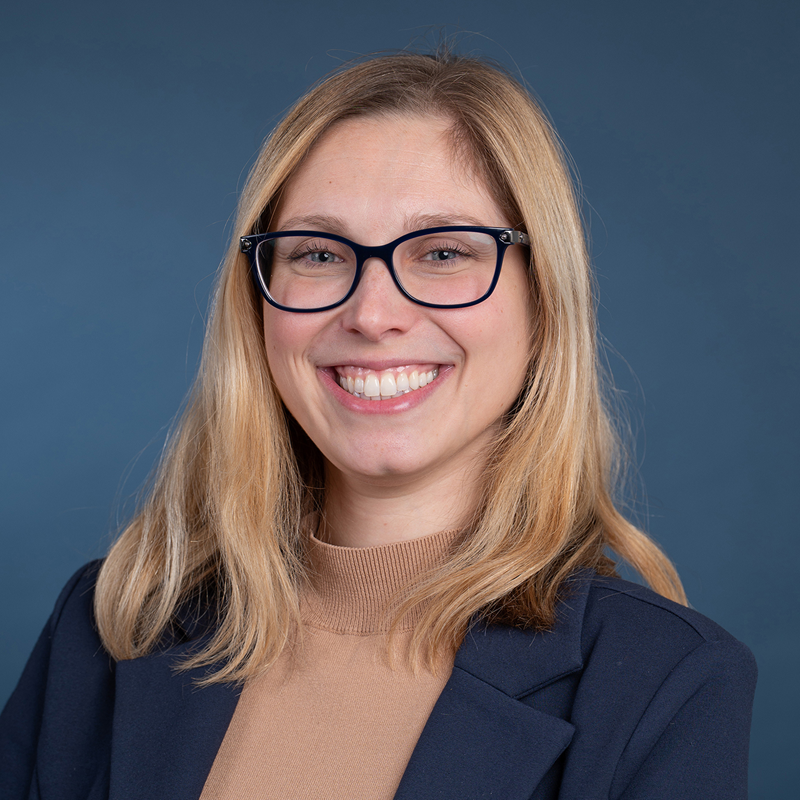 In this month’s Chair’s Spotlight, we feature Linsey Barker, DO, assistant professor of medicine in the Division of Geriatric Medicine at UMass Chan Medical School.
Dr. Barker’s interest in geriatrics was shaped by her grandfather, who played a significant role in her childhood. “My grandfather had a lot of health conditions, so that truly was my introduction to hospitals and medicine,” said Dr. Barker. “I like to think that my grandfather was part of the origin story of my career, but I always thought I would end up in geriatric medicine.” Inspired by his influence, Dr. Barker began her path to becoming a geriatrician.
Before she arrived at UMass Chan, Dr. Barker completed her bachelor’s degree in psychology from the College of the Holy Cross in Worcester, Massachusetts. She later earned her DO from the University of New England College of Osteopathic Medicine in Biddeford, Maine. She went on to complete her internal medicine residency at UMass Chan Medical School and a fellowship in geriatric medicine at Massachusetts General Brigham Hospital in Boston. “As I continued through medical school and throughout residency and my fellowship, I really became affirmed that this was the patient population that I wanted to be working with,” shared Dr. Barker. “I love thinking about the whole person and all of the various factors that contribute to somebody’s health and wellbeing, and how complex that might appear in some of our older adult patients.”
At UMass, Dr. Barker serves as the clinical director for the Division of Geriatric Medicine and as the ambulatory physician lead in the outpatient geriatrics clinic located on the Hanaman campus, where she cares for a panel of older adult patients. She additionally spends time caring for patients on the new inpatient trauma geriatric consult service.
In September 2025, Dr. Barker led the expansion initiative for the UMass Geriatric Medicine clinic. Along with her colleagues, Dr. Barker helped transform the clinic space to meet the growing needs of the aging community. Highlights of the initiative include expanding from 7 exam rooms to 12, locating secretaries and medical assistants more centrally within the clinic, allowing for better clinical flow and improved communication, and transitioning the clinic into a more age-friendly space. “We have increased the size of our waiting room for better wheelchair accessibility, installed handrails throughout the hallways for mobility assistance, acquired new exam tables with siderails and embedded scales, and an additional bathroom which allows us to accommodate more patients who may have challenges with incontinence or urinary frequency,” said Dr. Barker. “These small things have made a really big difference for our patients, and they continue to express their gratitude, so that’s been really nice to see that happen.” Other key personnel on the project included Dr. Sarah McGee, Dr. Jerry Gurwitz, Kerry Morse, Cindy Ramsey, and project manager Andrew Penniman.
Dr. Barker also cares for patients through the new inpatient trauma geriatric consult service, where she treats frail older adults admitted to the hospital with trauma. In this role, she focuses on understanding the causes of their trauma, identifying modifiable risk factors, and determining how to improve their hospital stay while working to reduce the risk of rehospitalization.
In collaboration with Lenka Drahoradova, nurse practitioner in the Division of Geriatric Medicine, and Dr. David Dosa, chief of the Division of Geriatric Medicine, Dr. Barker developed a user-friendly frailty scale, a six-question assessment that helps trauma APPs identify patients based on their degree of frailty. The most frail patients are then prioritized for care. “It’s been really positive so far; we have been able to make recommendations around the ways medications are used in the older adult population that are more likely to cause delirium and make dose adjustments,” said Dr. Barker. “It has been quite successful in helping move people out of the ED faster.”
In speaking about her work, Dr. Barker shares that although it can be challenging at times, the most rewarding aspect of her work is providing direct patient care. “When I hear that my patients trust me, feel comfortable with me, and seek out my opinions or recommendations because there’s that level of trust, those are the things that truly keep me going,” said Dr. Barker. “It is a big privilege of being a primary care doctor, you establish that trust with your patients, so they always feel like they have a medical home that they can go back to and that they trust.”
Dr. Barker also finds collaboration with her colleagues rewarding when providing care for older adults. “In Geriatrics, we really all understand the importance of being collaborative,” said Dr. Barker. “Within the clinic itself, we make sure that every person understands the importance of what we do, and it’s one of the rewarding aspects of my work.”
We thank Dr. Barker for her dedication to the Division of Geriatrics, her patients, and the department!